AI for Evidence Utilization · Search Agents
Supervising the search process produces reliable and generalizable information-seeking agents
* equal contribution
arXiv 2025
These slides were generated with the help of AI and may contain errors.
02Method
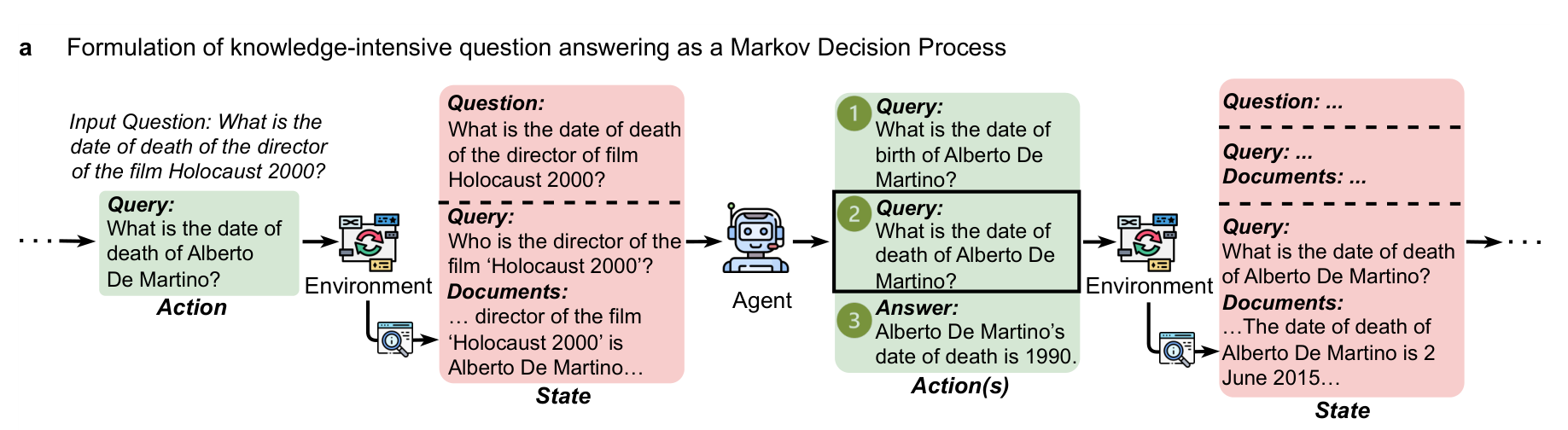
RAG-Gym formulates agentic search as a Markov decision process
- Each search query is an action; the accumulated question, queries and documents form the state.
- That framing makes every intermediate step addressable by a reward, not just the final answer.
03Method
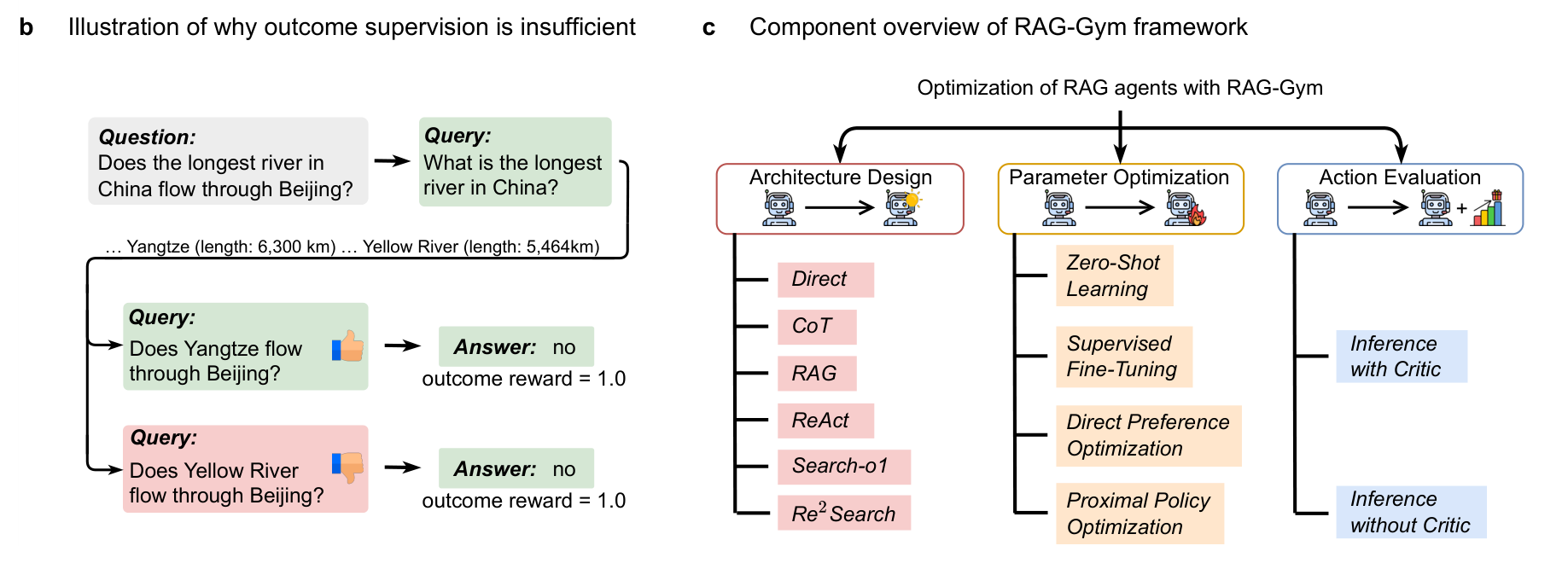
RAG-Gym supervises the search process rather than the final answer alone
- A wrong intermediate query can still yield the right answer, so outcome reward marks it correct.
- RAG-Gym optimizes three axes: architecture design, parameter tuning, and action evaluation.
04Result
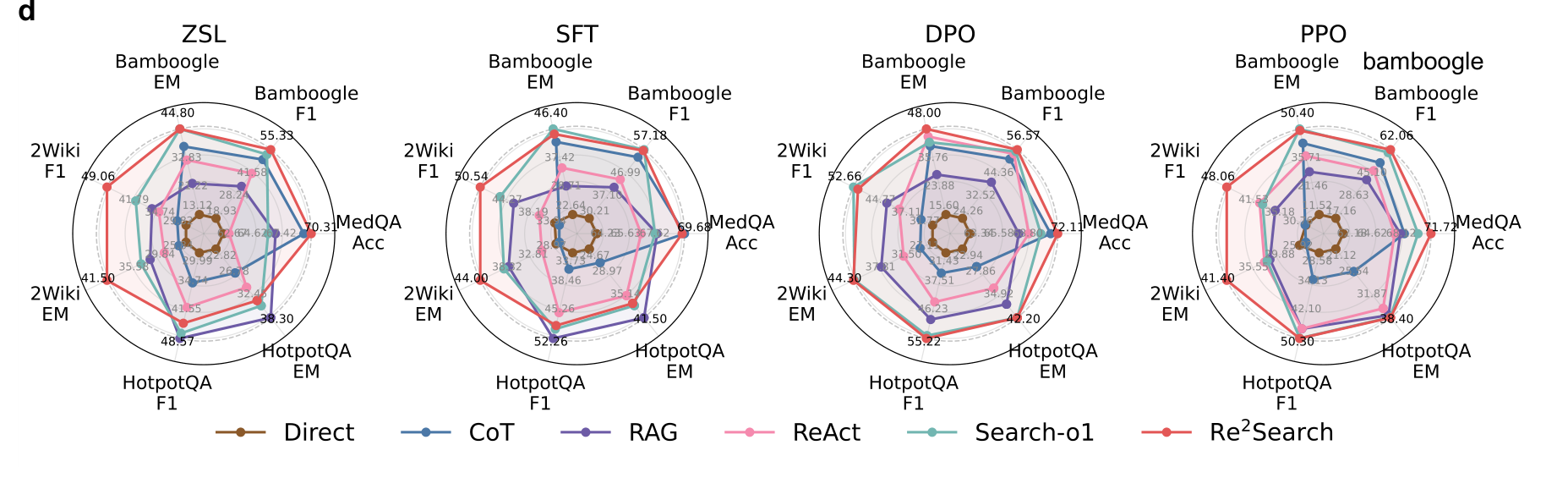
Reasoning reflection is the capability search agents most often lack
- Sweeping architectures and tuning methods isolates which agent capabilities actually matter.
- Re2Search is the only design carrying the full capability stack, and it leads on every axis of the radar.
05Result
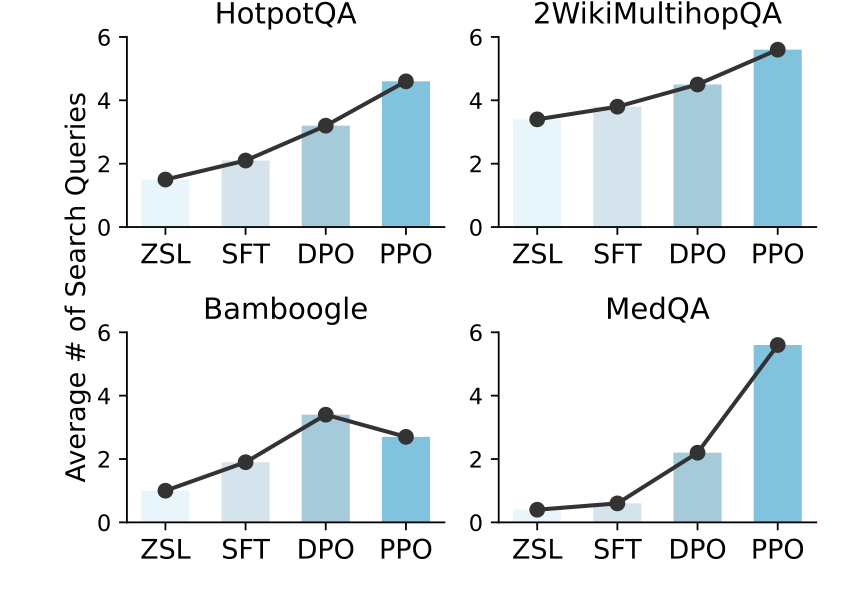
Process supervision increases the number of search queries agents issue
- Agents trained with process rewards issue more search queries before committing to an answer.
- The shift is consistent across HotpotQA, 2WikiMultihopQA, Bamboogle and MedQA.
06Result
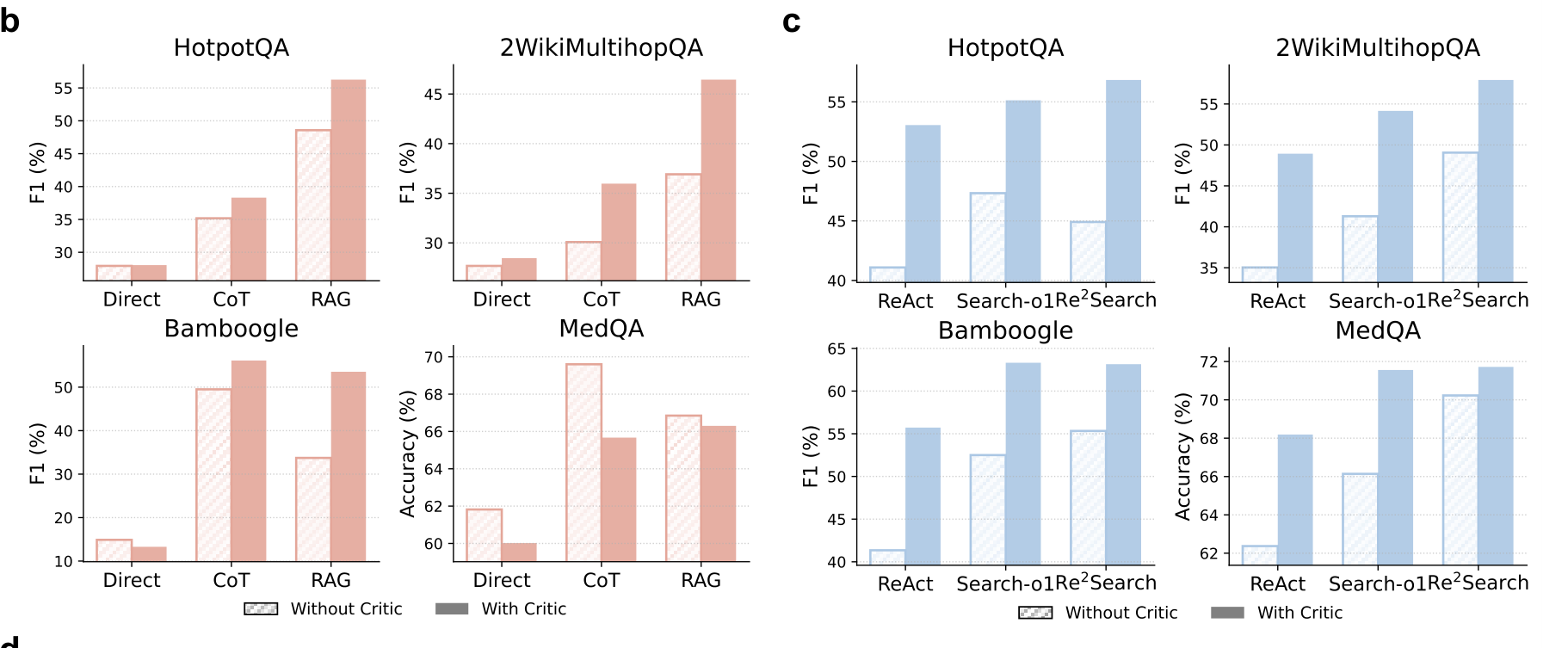
A process-reward critic improves accuracy across every agent architecture
- Scoring candidate actions with a process-reward critic improves accuracy without retraining the actor.
- The gain holds for Direct, CoT and RAG agents, and for ReAct, Search-o1 and Re2Search alike.
07Result
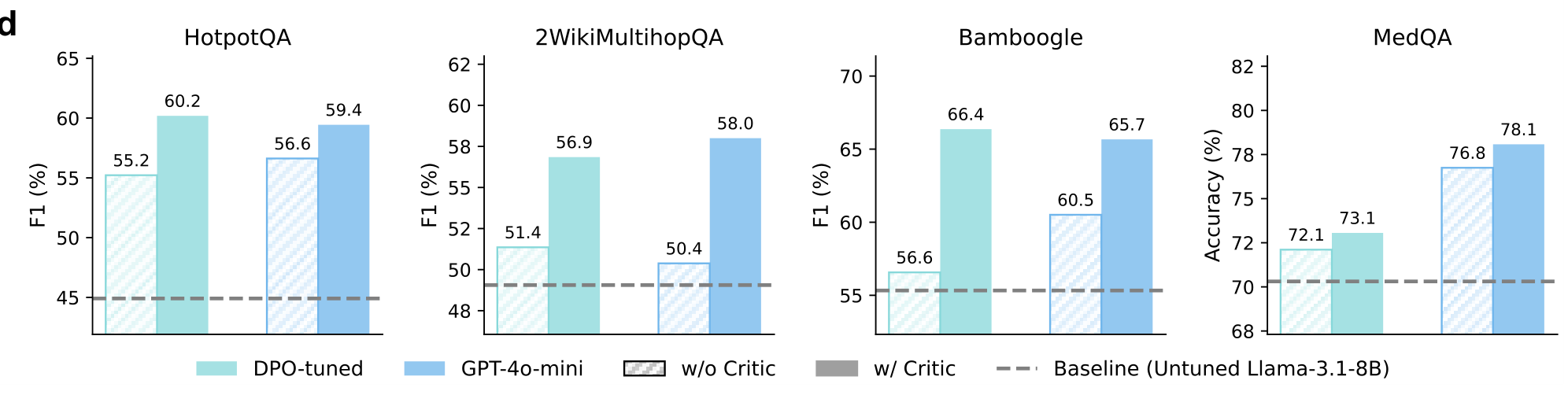
The critic transfers across model backbones, including proprietary actors
- A Llama-3.1-8B critic improves a proprietary GPT-4o-mini actor — 2WikiMultihopQA rises from 50.4 to 58.0.
- Bamboogle gains most, from 56.6 to 66.4 F1 on the tuned backbone.
08Result
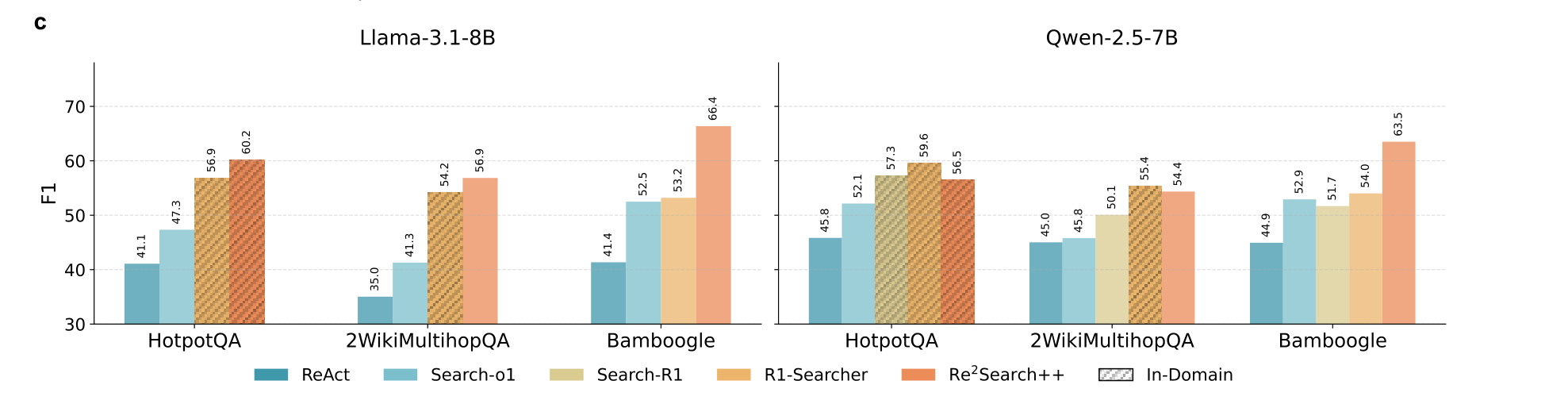
Re2Search++ generalises to out-of-domain benchmarks
- Re2Search++ leads every baseline on both Llama-3.1-8B and Qwen-2.5-7B backbones.
- The margin is widest on Bamboogle, the out-of-domain benchmark neither model was tuned for.
09Result
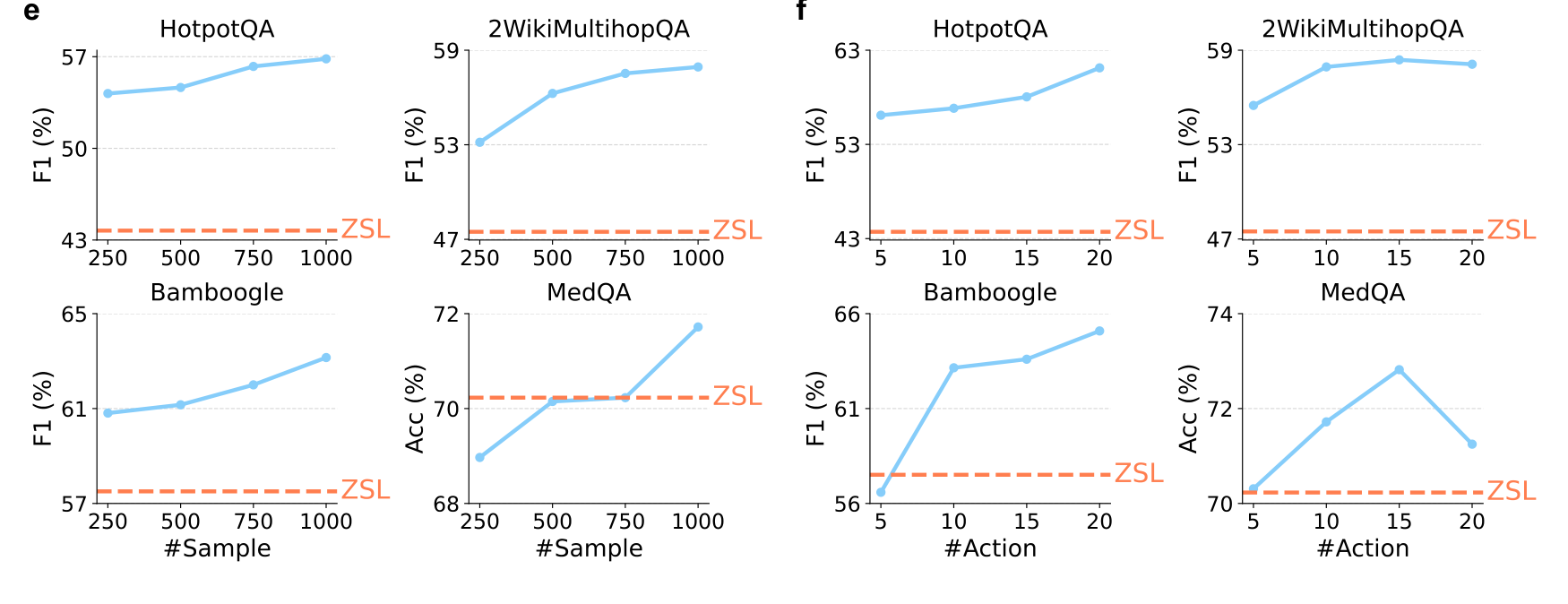
Performance scales with both training samples and sampled actions
- Accuracy rises steadily with the number of training samples, well past the zero-shot baseline.
- It also rises with the number of sampled actions at inference — more candidates for the critic to choose from.