AI for Evidence Utilization · Retrieve
PubMed and beyond: biomedical literature search in the age of artificial intelligence
eBioMedicine 2024
These slides were generated with the help of AI and may contain errors.
02Overview
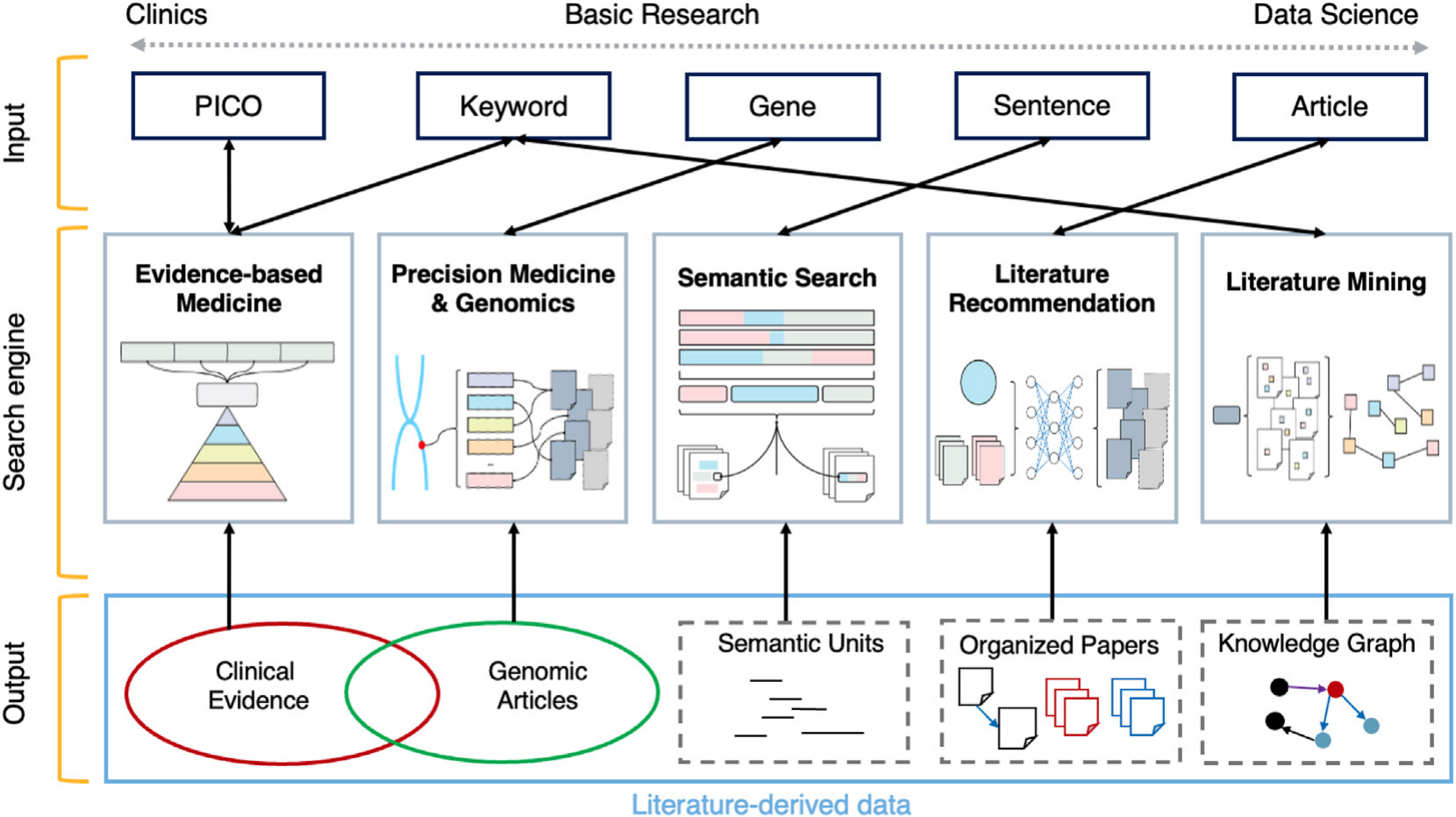
The review surveys more than 30 tools across five information needs
03Scenario 1
Evidence-based medicine
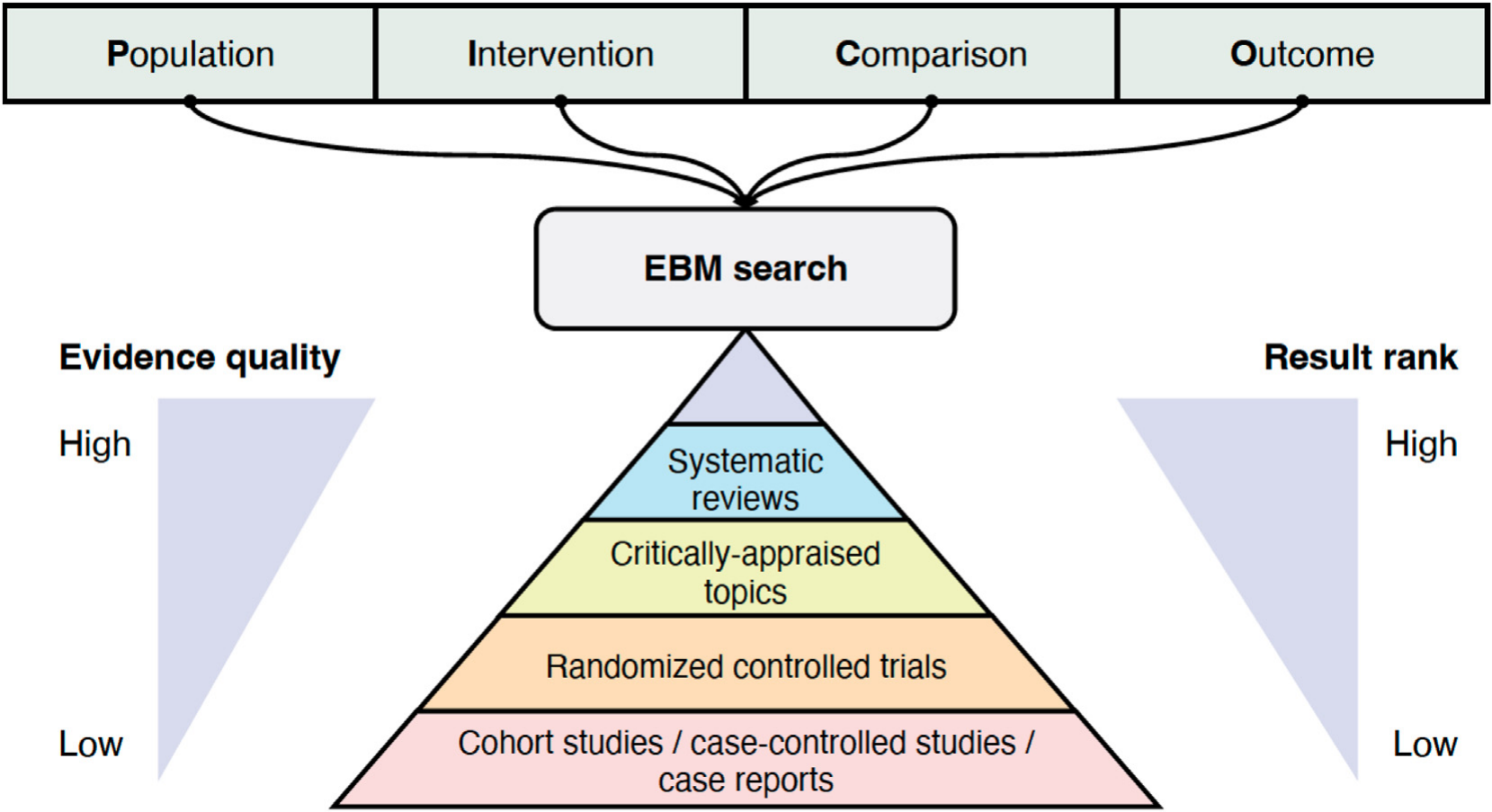
- PICO-structured clinical questions.
- Queries are expanded and ranked to surface the best available evidence for a bedside decision.
04Scenario 2
Precision medicine & genomics
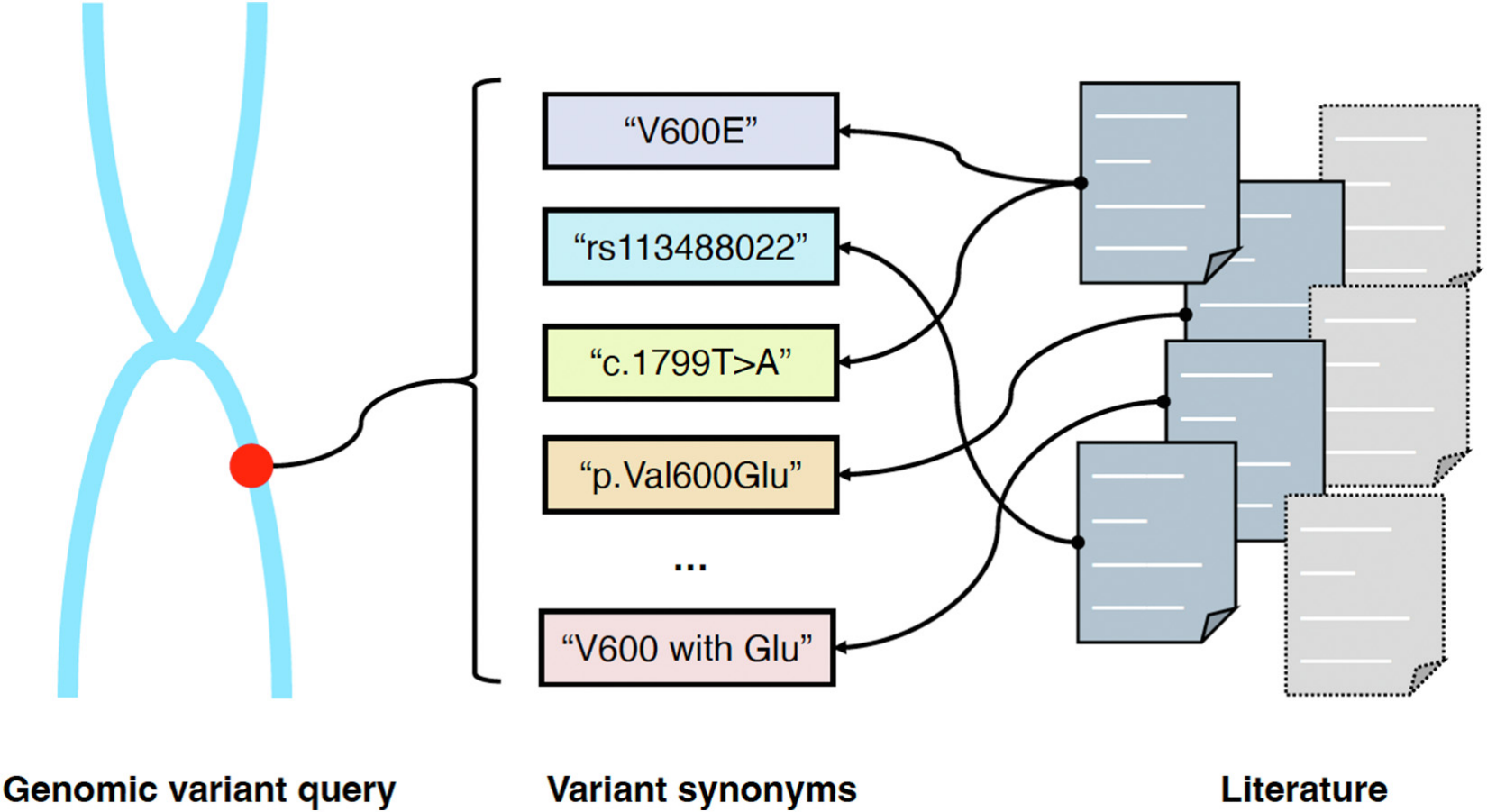
- Gene- and variant-centric retrieval.
- A genomic query is mapped to its many synonyms first, so variant nomenclature doesn’t fragment results.
05Scenario 3
Semantic search
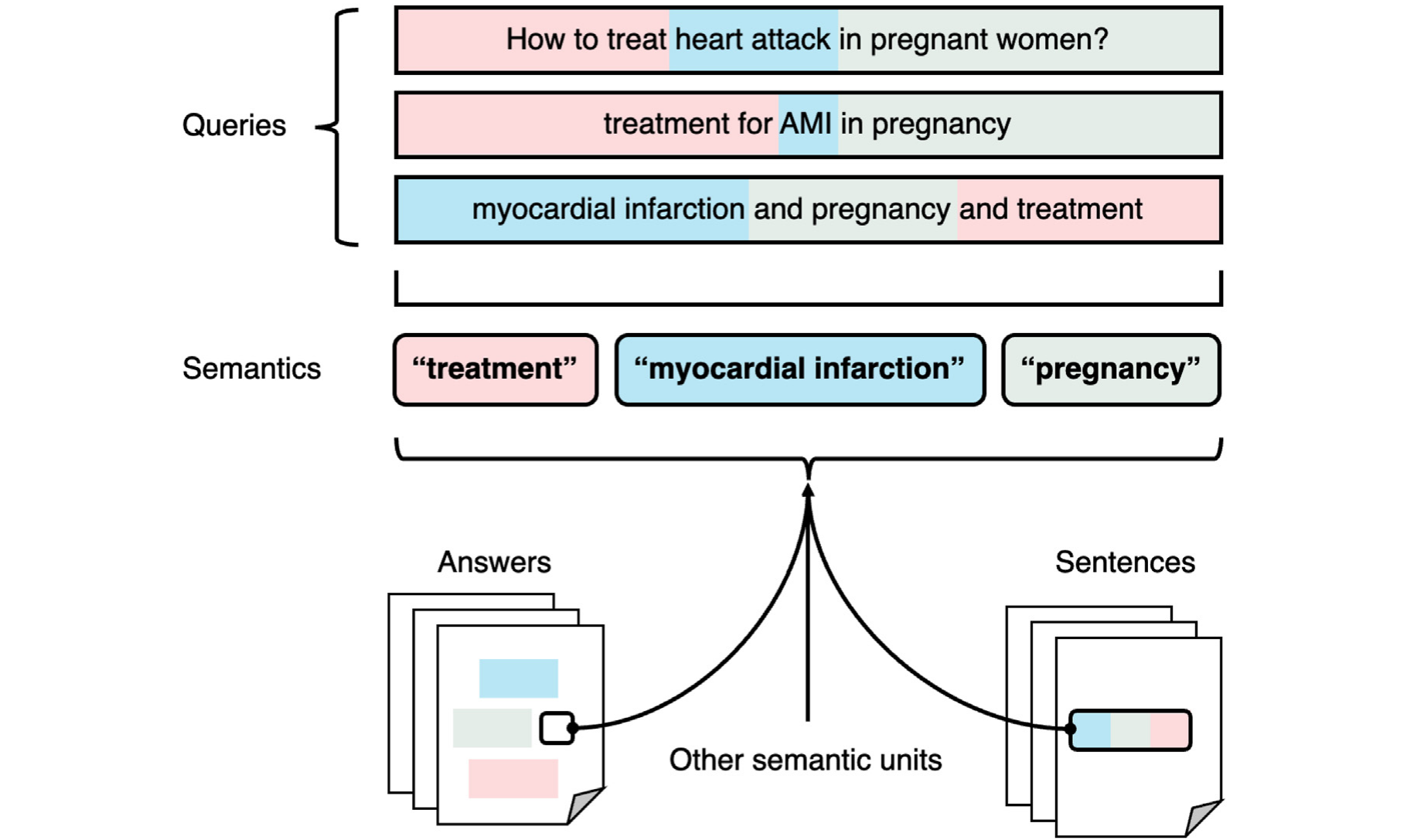
- Queries and sentences are embedded by meaning.
- Equivalent phrasings (“heart attack” / “myocardial infarction”) retrieve each other.
06Scenario 4
Literature recommendation
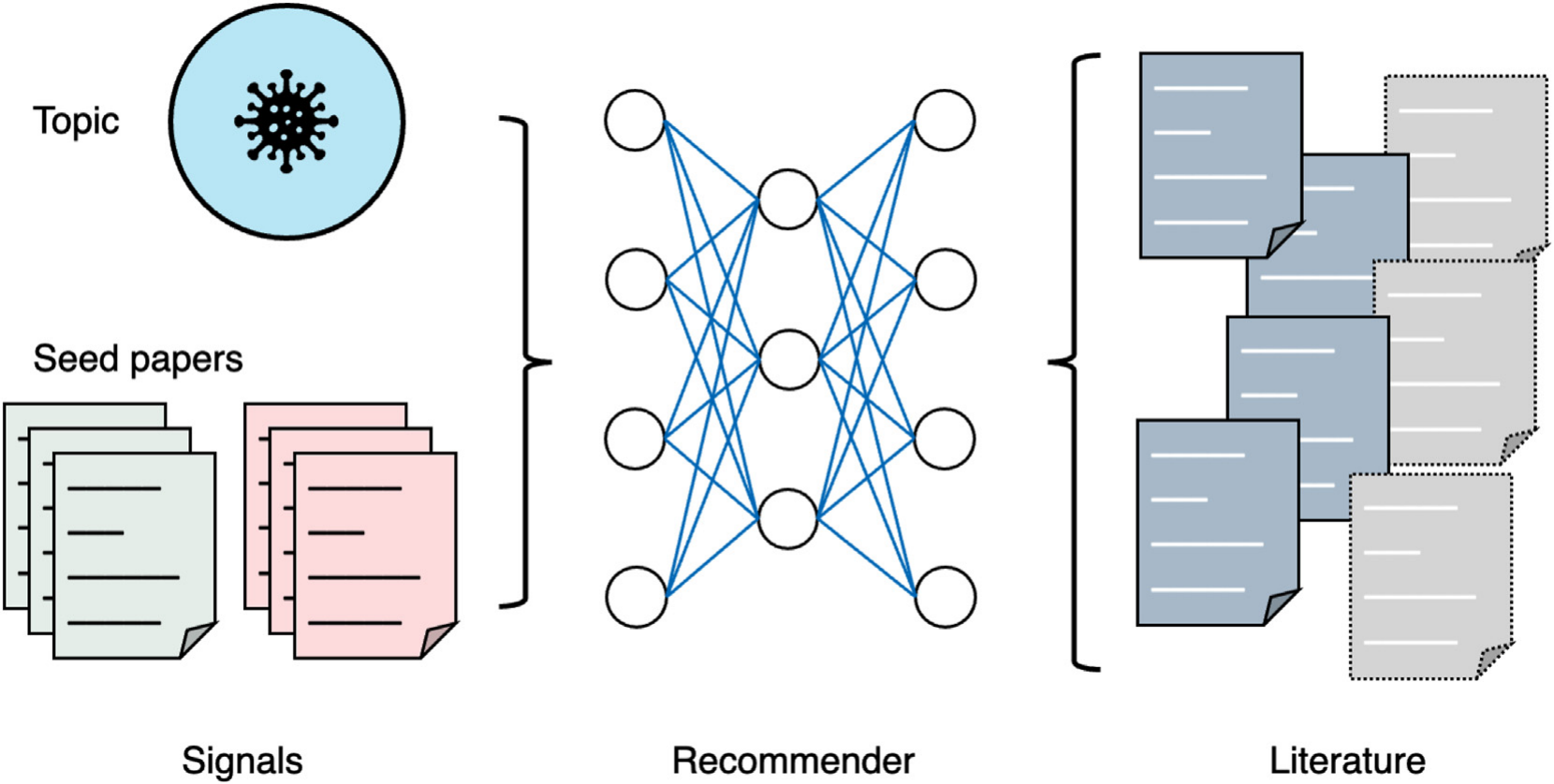
- Topic- and article-based recommenders.
- Learn from a set of seed papers to surface related and follow-up work.
07Scenario 5
Literature mining
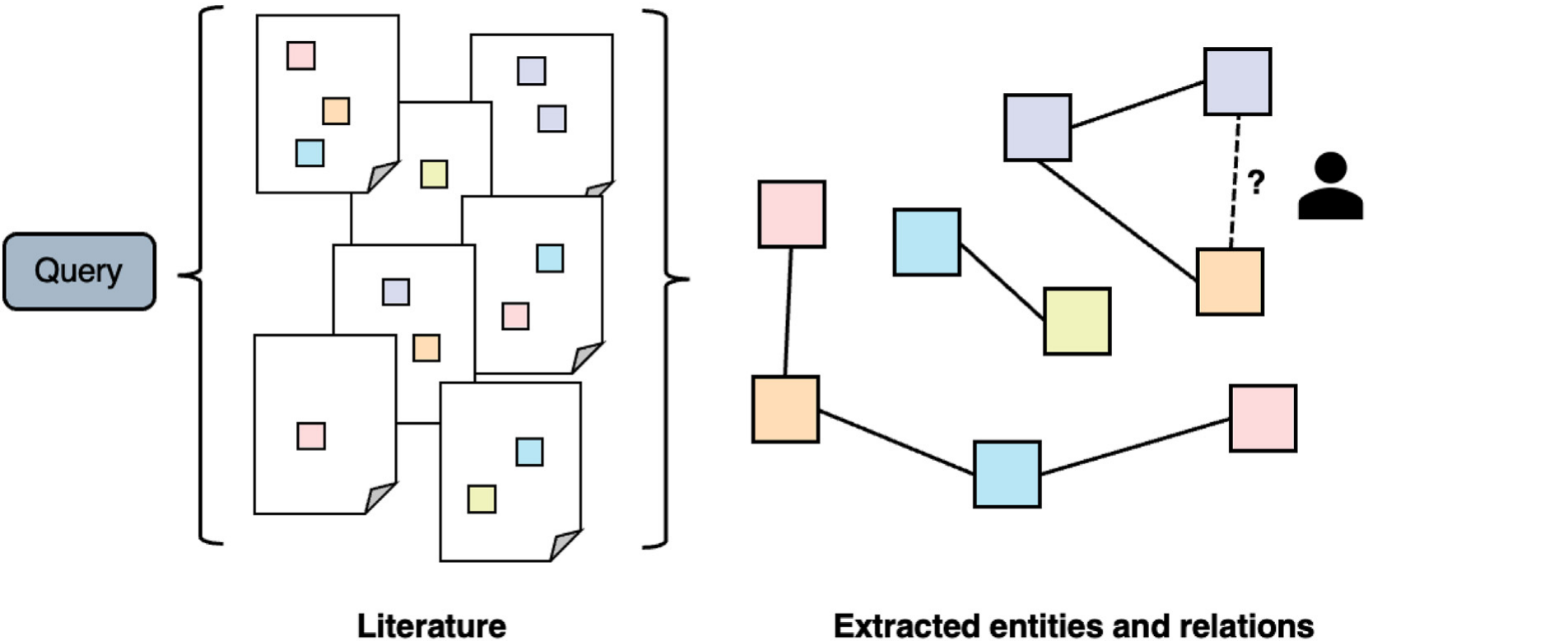
- Extract entities and their relations across many papers.
- Assemble a searchable knowledge graph.